

法国:欧洲桥头堡还是合规试炼场?(下)| 人物·域外观察(中英双语)
发布日期:2026-09-29 浏览次数:44

"人物·域外观察"为QC Global 的国别法律实务专栏。
"People · Overseas Perspectives" is QC Global's country-focused legal practice column.
在本栏目中,我们将邀请本所拥有海外留学、长期域外生活经历的律师,结合自身在地学习与生活经验,深度拆解目标国家的营商环境、外商投资政策、出海机遇、潜在风险及实务落地要点,为中国企业跨境投资与海外经营提供国别参考。
In this column, we invite attorneys at our firm with overseas study or long-term international experience to draw on their first-hand knowledge and examine the target country's business environment, foreign investment policies, opportunities, risks, and practical considerations for Chinese companies pursuing cross-border investment and international operations.
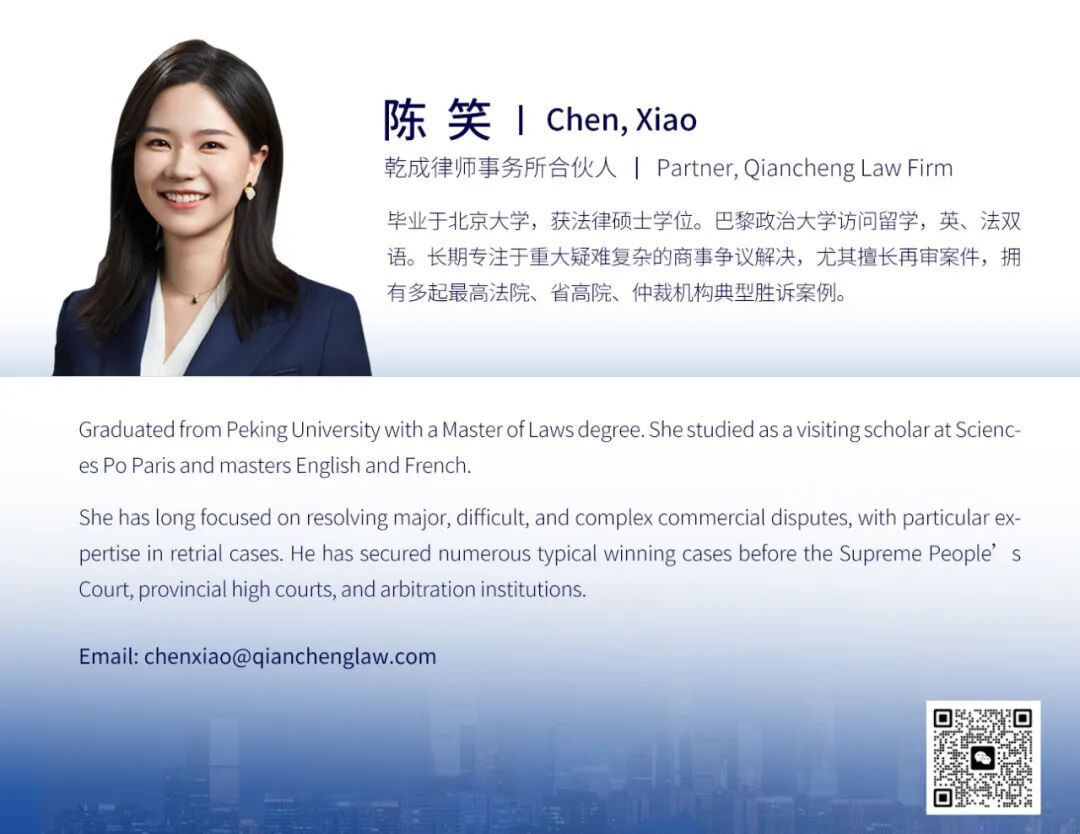
首期栏目,由示范团合伙人陈笑律师为大家带来法国"观察"。陈笑律师2017年曾赴法国交流访学,在巴黎政治大学修读经济法学,并在当地律所合伙人的指导下参与了数个本地项目,对涉法跨境投资有个人独到见解。本篇由其带来中资企业出海法国的专题分享。
In this inaugural edition, Chen Xiao, a partner at the firm, shares her observations on France.In 2017, Chen Xiao traveled to France for an academic visit and studied economic law at Sciences Po in Paris. She also participated in several local projects under the guidance of partners at a French law firm, gaining first-hand experience of cross-border investment and related legal issues. This article examines the opportunities and legal considerations for Chinese companies expanding into France.
欢迎乾成更多具有海外留学或生活经历,或是对特定国家特别关注的小伙伴踊跃投稿!
We welcome contributions from colleagues at Qiancheng Law Firm who have studied or lived abroad or have a particular interest in a specific country.


目录
1.法国营商环境:优雅外壳下的"强监管内核"
I. France's Business Environment: Strong Regulatory Oversight Beneath an Elegant Exterior
2.外资准入:不是"来不来",而是"先问审不审"
II. Foreign Investment Access: The Question Is Not Whether You Can Enter, but Whether Review Comes First
3.中资出海法国:真正窗口不在塞纳河,而在北部工业带和绿色转型
III. Chinese Investment in France: The Real Opportunity Is Not on the Seine, but in the Northern Industrial Belt and the Green Transition
4.高频法律风险:最贵的不是律师费,而是"没想到"
IV. Common Legal Risks: The Most Expensive Mistake Is the One You Never Saw Coming
5.争议解决:把"打官司"想在前头
V. Dispute Resolution: Think About Litigation Before You Need It
6.亲历观察:在法国做生意,慢是一种制度
VI. First-Hand Observations: In France, Slowness Is Institutionalized
7.如果现在进入法国,建议先回答六个问题
VII. If You Are Entering France Now, Answer These Six Questions First
(文章内容较长,故分为上、下两篇。本期为下篇第四至七项。)
04
高频法律风险:
最贵的不是律师费,而是"没想到"
IV. Common Legal Risks: The Most Expensive Mistake Is the One You Never Saw Coming
Company Formation and Basic Compliance
法国常用公司形式为简化股份公司(SAS)、有限责任公司(SARL)和股份有限公司(SA)。SAS因章程自由度高,是外资最常采用的形式。SAS和SARL原则上没有法定最低注册资本,可从1欧元起设,但SAS现金出资需实缴至少50%,SARL现金出资需实缴至少20%(实物出资须在设立登记时100%全额缴足);SA则要求最低37,000欧元注册资本。
The most common corporate forms in France are the simplified joint-stock company (SAS), private limited liability company (SARL), and public limited company (SA). The SAS is particularly popular with foreign investors because of the flexibility of its articles of association. In principle, neither an SAS nor an SARL is subject to a statutory minimum capital requirement, and either may be formed with €1 of capital. However, at least 50% of an SAS's cash contribution must be paid in, compared with at least 20% for an SARL; in-kind contributions must be fully paid at formation. An SA requires minimum capital of €37,000.
所有公司须通过国家企业登记册(RNE)进行登记,商业公司还须遵守适用的商业及公司登记要求,取得SIREN/SIRET号;实益所有人信息必须如实申报至实益所有人登记簿(RBE)。当自然人直接或间接持有25%以上股权或表决权时,通常须登记为实益所有人。公司每年需结账、批准财务报表,并按期完成税务申报和年报提交。
French businesses are generally registered through the national business register (Registre national des entreprises, or RNE), with commercial companies also subject to the applicable commercial and corporate registration requirements. They obtain SIREN/SIRET identification numbers. Beneficial ownership information must be accurately reported in the Register of Beneficial Owners (RBE). Where an individual directly or indirectly holds more than 25% of the equity or voting rights, that person will generally need to be registered as a beneficial owner. Companies must close their books annually, approve their financial statements, and timely file tax returns and required annual filings.
实践中,银行开户、注册地址、租赁合同、资金证明等往往是更大的落地门槛。逾期或反复违规可能面临罚则,甚至影响银行账户与商业信用。
In practice, opening a bank account, securing a registered office, arranging lease agreements, and providing proof of funds can pose more significant practical hurdles. Repeated or late noncompliance may result in penalties and can affect banking relationships and commercial standing.

法国法定工作时间以每周35小时为基准。2026年6月1日起,法国法定最低工资(SMIC)提高至每小时12.31欧元,按35小时工作制计算,每月税前工资为1,867.02欧元。但这只是法定底线,绝大多数行业集体协议(convention collective)规定的薪资和福利标准远高于SMIC;对于管理层等自主性较强的岗位,通常适用按年工作天数计酬的forfait jours制度,而非按小时计薪。
France's statutory workweek is based on 35 hours. Effective June 1, 2026, the French statutory minimum wage (SMIC) increased to €12.31 per hour, equivalent to €1,867.02 in gross monthly pay based on a 35-hour workweek. This is only the statutory floor: collective bargaining agreements (conventions collectives) in most industries provide for compensation and benefits above the SMIC. For managers and other employees with substantial autonomy, the forfait jours system, based on an annual number of working days rather than hourly hours, commonly applies.
此外,法国的社会保险、带薪休假、集体协议、员工代表机制以及解雇程序,都可能显著影响企业的人力成本。员工人数达到11人时须设立员工代表机构(CSE);解雇员工必须有"真实且严肃的理由",并履行与CSE协商等复杂程序。中资企业最容易犯的错误,是把国内"签合同、发通知"的用工逻辑直接搬到法国。
French social-security contributions, paid leave, collective bargaining agreements, employee-representation requirements, and termination procedures can all materially affect labor costs. Once an employer reaches 11 employees, it must establish a Social and Economic Committee (CSE). An employee termination must be based on a real and serious reason and may require consultation with the CSE, together with compliance with other detailed procedures. One of the most common mistakes Chinese companies make is to transplant China's approach to employment contracts and notices directly into France.
这也是法国本地化最重要的一课:法国子公司不能只是"中国总部在法国的一个办事处",而必须成为一个真正按照法国规则运行的企业。中国母公司若过度干预子公司的日常经营、跨境代付工资或混淆财务边界,这可能引发与"事实董事"(dirigeant de fait)、税务常设机构或公司责任相关的风险。具体的法律后果取决于实际控制程度、经营安排及相关行为。
This is one of the most important lessons of localization: a French subsidiary cannot simply function as an extension of the Chinese headquarters; it must operate as a genuine business in accordance with French rules. If the Chinese parent company excessively intervenes in the subsidiary's day-to-day management, pays employees across borders, or blurs the financial and operational boundaries between the two entities, this may give rise to risks relating to a de facto director (dirigeant de fait), a tax permanent establishment, or corporate liability. The specific legal consequences depend on the degree of actual control, the operating arrangements, and the conduct in question.
Tax
法国标准企业所得税率为25%;年营业额低于1,000万欧元、且至少75%资本由自然人持有的中小企业,其利润中首个42,500欧元可适用15%优惠税率。增值税(TVA)标准税率为20%,另有10%中间税率及5.5%低税率、2.1%超低税率等优惠税率。法国税务稽查严格,转让定价、常设机构、关联交易是高频风险点。
France's standard corporate income tax rate is 25%. For SMEs with annual revenue below €10 million and at least 75% of their capital held by individuals, the first €42,500 of taxable profit may qualify for the reduced 15% rate. The standard value-added tax (VAT) rate is 20%, with reduced rates including 10%, 5.5%, and 2.1%. French tax audits are rigorous, with transfer pricing, permanent establishments, and related-party transactions among the key areas of risk.
在产业激励方面,除C3IV外,企业还可关注研发税收抵免(CIR,Crédit Impôt Recherche)。CIR按合格研发支出的一定比例抵扣企业所得税,是法国最常见的研发激励工具之一。
In addition to C3IV, companies should consider the R&D tax credit (CIR, Crédit d'Impôt Recherche). CIR allows a portion of qualifying R&D expenditure to be credited against corporate income tax and is one of France's principal R&D incentive programs.
Data and Intellectual Property
法国适用欧盟《通用数据保护条例》(GDPR)和法国《信息与自由法》(Loi Informatique et Libertés),法国数据保护机构CNIL执法积极。GDPR并不是简单地要求企业准备一份法语隐私政策,而是要求企业重新审视整个数据处理链条:谁收集数据、谁决定用途、谁负责处理、数据存储在哪里、集团总部能否访问,以及个人数据能否传输到欧盟之外。总部在中国的企业即使未在法国设立实体,只要向法国用户提供服务或监控其行为,同样可能受GDPR管辖。违规罚款最高可达全球年营业额的4%或2,000万欧元(取较高者)。
France is subject to the EU General Data Protection Regulation (GDPR) and the French Data Protection Act (Loi Informatique et Libertés), and the French data-protection authority, CNIL, takes an active enforcement approach. GDPR compliance is not simply a matter of preparing a privacy policy in French; it requires companies to reassess the entire data-processing chain: who collects the data, who determines the purposes of processing, who processes it, where it is stored, whether headquarters can access it, and whether personal data may be transferred outside the EU. Even a company headquartered in China with no French entity may fall within the scope of the GDPR if it offers services to individuals in France or monitors their behavior. The maximum administrative fine can be 4% of worldwide annual turnover or €20 million, whichever is higher.
因此,对于中国企业而言,最值得提前设计的不是"隐私政策",而是跨境数据架构:是否需要指定欧盟境内代表人、如何处理数据主体权利请求、向中国传输数据时采用何种合法机制(如标准合同条款SCCs)、以及在法国本地部署数据存储和处理的必要性。
For Chinese companies, therefore, the key issue to design in advance is not simply a privacy policy but the cross-border data architecture: whether an EU representative is required, how data-subject rights requests will be handled, what lawful mechanism will be used for transfers to China (such as Standard Contractual Clauses, or SCCs), and whether data storage and processing should be deployed locally in France.
知识产权同样如此。法国不仅是一个成熟消费市场,也是欧洲重要的技术和品牌资源聚集地。对于准备收购法国企业的中国公司,知识产权尽调不能停留在"有没有专利、有没有商标",还应当进一步确认专利和软件权属、职务发明、技术许可、商业秘密以及研发成果归属等问题。尤其对于技术型并购而言:买到一家法国公司,并不当然意味着买到了它所有的核心技术。
Intellectual property presents similar issues. France is not only a mature consumer market but also an important European hub for technology and brands. For Chinese companies acquiring French businesses, IP due diligence must go beyond asking whether the target owns patents or trademarks. It should also verify ownership of patents and software rights, employee inventions, technology licenses, trade secrets, and ownership of R&D results. Particularly in technology-focused acquisitions, acquiring a French company does not automatically mean acquiring all of its core technology.
Cross-Border Transactions and Geopolitical Regulation
除法国外资审查外,中资在法并购还可能触发欧盟层面的外国补贴条例(FSR)申报和反垄断审查。欧盟近年对华电动汽车、电池、光伏等领域的贸易与产业政策趋紧,企业在投资节奏、原产地安排和供应链布局上需预留政策弹性。
In addition to French foreign investment review, Chinese acquisitions in France may trigger EU-level filings under the Foreign Subsidies Regulation (FSR) and merger-control review. In recent years, the EU has tightened its trade and industrial policies toward China in areas including electric vehicles, batteries, and solar photovoltaics. Companies should therefore build sufficient flexibility into investment timing, origin arrangements, and supply-chain planning.
法国《萨潘二号法》(Sapin II,2016-1691号法律)要求员工500人以上、且年营业额超过1亿欧元的企业(或符合该规模的法国集团及其子公司)建立反腐败合规计划,包括行为守则、举报机制、风险评估、第三方尽职调查等。中资在法子公司一旦达到门槛,就必须建立并执行合规体系,不能只靠国内母公司的制度"远程覆盖"。
France's SapinII Law LawNo.2016-1691requires companies with at least 500 employees and annual revenue exceeding €100 million, as well as qualifying French groups and their subsidiaries, to implement an anti-corruption compliance program covering matters such as a code of conduct, whistleblower mechanisms, risk assessments, and third-party due diligence. Once a Chinese subsidiary in France falls within the applicable scope, the group must ensure that an effective compliance framework is implemented rather than relying solely on policies maintained remotely by the Chinese parent.

05
争议解决:
把"打官司"想在前头
V. Dispute Resolution: Think About Litigation Before You Need It
很多中企进行商事交易订立合同时对于争议解决条款并不关注,发生纠纷才发现维权周期大不相同。法国法院诉讼周期因案而异,商事法院一审平均约9---12个月,复杂案件可能持续2---3年;若进入上诉和法国最高法院(Cour de cassation)程序,整体周期更长。
Many Chinese companies pay little attention to dispute-resolution clauses when entering into commercial contracts, only to discover after a dispute arises that the process and timetable for protecting their rights can be very different. The duration of proceedings in French courts varies by case; first-instance commercial litigation may take approximately 9--12 months on average, while complex cases can last two to three years. If the matter proceeds to appeal and ultimately to the French Supreme Court (Cour de cassation), the overall timeline may be considerably longer.
但法国对仲裁裁决执行友好,巴黎也是国际仲裁重镇。法国是《纽约公约》缔约国,跨境争议可在合同中约定国际商会仲裁院(ICC,总部巴黎)仲裁规则,或选择其他国际仲裁机构。若需财产保全,可考虑法国法下的临时措施,但须有充分证据和本地律师支持。
France is nevertheless arbitration-friendly, and Paris is a major international arbitration center. France is a party to the New York Convention, and cross-border contracts may provide for arbitration under the rules of the International Chamber of Commerce (ICC), headquartered in Paris, or another international arbitral institution. Where asset-preservation measures are needed, interim relief under French law may be considered, with appropriate evidence and support from local counsel.
06
亲历观察:
在法国做生意,慢是一种制度
VI. First-Hand Observations: In France, Slowness Is Institutionalized
中资企业追求效率,常常迫切追问"我们下周能交割吗?"
Chinese companies prioritize efficiency and often ask, "Can we close next week?"
在法国,答案常常是不能。外资审查、银行开户、工会磋商、签证审批,都有不可压缩的周期。法国人把这种"慢"制度化,不是为了刁难谁,而是为了确保程序完整和风险可控。
In France, the answer is often no. Foreign investment review, bank-account opening, consultations with employee representatives, and visa procedures all involve timelines that cannot simply be compressed. This institutionalized "slowness" is not intended to make things difficult; it reflects a system designed to ensure procedural completeness and manage risk.
有几个很有地方特色但很关键的小建议:
A few highly local but important practical suggestions:
1).八月不要推关键谈判。7月下旬到8月,法国大部分商业和行政活动进入假期状态。9月"rentrée"之后才会密集推进。很多中资项目不是失败,而是错误地在8月启动关键沟通,白白消耗耐心。
Do not schedule critical negotiations in August. From late July through August, much of French business and administrative activity shifts into vacation mode. Activity picks up again after the September "rentrée." Many Chinese projects do not fail; instead, they lose time and goodwill because critical communications are initiated in August.
2).法语不是加分项,是入场条件。高管也许说英语,但工会、地方政府、银行合规部门更习惯法语。关键文件、谈判纪要以法语为准备,能显著降低误解与对抗。
French is not a bonus; it is an entry requirement. Senior executives may speak English, but unions, local governments, and bank compliance teams are more accustomed to working in French. Preparing key documents and negotiation minutes in French can significantly reduce misunderstandings and confrontation.
3).工会不是敌人,是必须提前对话的对手方。中资企业最大的文化冲击,是发现一个排班调整、一次工厂搬迁,都需要与员工代表机构沟通。提前沟通成本不高,忽视沟通的代价却可能是一次罢工、一场舆情,甚至项目停摆。
Unions are not the enemy; they are a stakeholder with whom dialogue must begin early. One of the biggest cultural shocks for Chinese companies is discovering that even a shift-schedule change or factory relocation may require consultation with employee representatives. The cost of communicating early is modest; the cost of ignoring that process can be a strike, negative public attention, or even a project shutdown.
地方政府比你想象的更欢迎投资。法国北部城市对制造业投资态度积极,能提供土地、培训、补贴等支持。但前提是:环保、就业、技术主权是硬约束。中资企业应主动对接Business France和当地大区发展局,把地方资源转化为项目确定性。
Local governments can be more welcoming to investment than you might expect. Cities in northern France are supportive of manufacturing investment and can provide assistance with land, training, and grants. The conditions, however, are firm: environmental protection, employment, and technological sovereignty remain key constraints. Chinese companies should proactively engage with Business France and regional development agencies and turn local resources into greater project certainty.

07
如果现在进入法国
建议先回答六个问题
VII. If You Are Entering France Now, Answer These Six Questions First
对于准备进入法国的中国企业,没有必要一开始就陷入大量法律条文,可以先问问自己六个问题:
For Chinese companies preparing to enter France, there is no need to begin by getting lost in a mass of legal provisions. Start with six practical questions:
1).我们是以什么形式进入法国?是绿地投资、并购、合资,还是先设立代表处或分公司试水?
In what form will we enter France? Greenfield investment, acquisition, joint venture, or first establishing a representative office or branch to test the market?
2).我们的投资是否落入法国敏感行业,是否触发外商投资审查?目标公司上市地点在哪里,表决权结构如何?
Does our investment fall within a sensitive sector in France and trigger foreign investment review? Where is the target company listed, and how is its voting-right structure organized?
3).我们的数据如何处理?是否需要欧盟境内代表人,向中国传输数据是否有合法路径?
How will we process data? Do we need an EU representative, and is there a lawful mechanism for transferring data to China?
4).我们的用工模式是什么?适用哪个行业的集体协议,管理层是否采用forfait jours?
What is our employment model? Which industry collective bargaining agreement applies, and should management use the forfait jours system?
5).我们能否利用法国的财税激励?是否符合C3IV、CIR研发税收抵免或中小企业优惠税率的条件?
Can we take advantage of French tax and financial incentives? Do we qualify for C3IV, the CIR R&D tax credit, or the preferential corporate tax rate for SMEs?
6).我们的本地化团队是否真正具备"连接中法两套规则"的能力,而不仅仅是翻译或行政支持?
Does our local team genuinely have the ability to bridge the Chinese and French regulatory systems, rather than merely providing translation or administrative support?
其中,第二步往往决定整个项目的成败。因为法国的投资审查、行业许可和反垄断问题,一旦到了交易后期才发现,可能直接影响交易结构、交割时间甚至交易本身。
The second question often determines the success or failure of the entire project. If French investment review, industry-specific licensing, or antitrust issues are identified only at a late stage, they may directly affect the transaction structure, closing timetable, and even the transaction itself.
【结语】
Conclusion
法国值得去,但不能用"中国经验"简单复制。
France is worth entering, but Chinese experience cannot simply be copied and pasted into the French market.
法国不是一个最容易进入的欧洲市场,却可能是一个非常值得长期布局的市场。它的优势在于产业、技术、品牌、人才和欧洲市场;它的门槛,则来自严格的监管、成熟的劳动制度以及高度本地化的商业环境。
France is not the easiest European market to enter, but it may be an exceptionally worthwhile market for long-term investment. Its strengths lie in industry, technology, brands, talent, and access to the European market; its barriers arise from strict regulation, a mature employment system, and a highly localized business environment.
对中国企业而言,真正值得思考的已经不是"如何把中国的产品卖到法国",而是"如何让中国企业成为法国乃至欧洲产业体系的一部分"。这意味着未来的法国出海,可能不再只是销售,而是投资、并购、研发、制造、品牌和人才的综合布局。法国真正的机会,也许恰恰存在于中国企业优势与法国优势的交叉点上。
For Chinese companies, the key question is no longer "How do we sell Chinese products in France?" but "How do we make a Chinese company part of France's---and Europe's---industrial ecosystem?" Future expansion into France may therefore involve much more than sales; it may require an integrated strategy covering investment, acquisitions, R&D, manufacturing, branding, and talent. France's real opportunities may lie precisely at the intersection of Chinese and French strengths.
出海从来不是把企业搬到另一个国家,而是让企业真正进入另一个国家的商业、法律与社会体系。对中资企业来说,法国项目的成败,往往不取决于商业判断是否正确,而取决于是否把合规、用工、语言和地方关系当作战略变量,在项目启动之初就纳入整体规划。
Going overseas has never been simply about moving a business to another country; it is about genuinely entering another country's commercial, legal, and social systems. For Chinese companies, the success or failure of a French project often depends not only on whether the commercial judgment is sound, but also on whether compliance, employment, language, and local relationships are treated as strategic variables and incorporated into the overall plan from the outset.
参考来源与法律依据
References and Legal Authorities
• 法国《官方公报》第2026-718号法令(2026年8月2日公布,2026年8月17日生效):外资审查申报义务。
French Official Journal, Decree No. 2026-718 (published August 2, 2026; effective August 17, 2026): foreign investment notification requirements.
• 法国《官方公报》第2026-763号法令:C3IV延长至2028年12月31日。
French Official Journal, Decree No. 2026-763: extension of C3IV through December 31, 2028.
• 法国《货币与金融法典》(Code monétaire et financier)第L.151-3条、第R.151-3条、第R.151-6条:外资审查制度。
French Monetary and Financial Code (Code monétaire et financier), Articles L.151-3, R.151-3, and R.151-6: foreign investment review regime.
• 法国《商法典》(Code de commerce):公司注册、SAS/SARL/SA、商业登记。
French Commercial Code (Code de commerce): company registration, SAS/SARL/SA, and commercial registration.
• 法国《劳动法典》(Code du travail):工时、SMIC、解雇、员工代表机构、集体协议。
French Labor Code (Code du travail): working hours, SMIC, terminations, employee representative bodies, and collective bargaining agreements.
• 欧盟《通用数据保护条例》(GDPR)及法国《信息与自由法》(Loi Informatique et Libertés)。
EU General Data Protection Regulation (GDPR) and French Data Protection Act (Loi Informatique et Libertés).
• 法国《萨潘二号法》(Loi Sapin II,2016-1691号法律)及法国反腐败局(AFA)指南。
French Sapin II Law (Loi Sapin II, Law No. 2016-1691) and guidance issued by the French Anti-Corruption Agency (AFA).
• 法国《绿色产业法案》(Loi relative à l'industrie verte)及C3IV(Crédit d'Impôt Industrie Verte)细则。
French Green Industry Act (Loi relative à l'industrie verte) and C3IV (Crédit d'Impôt Industrie Verte) implementing rules.
• 法国税务局(DGFiP)企业所得税、增值税、C3IV官方指引。
French tax authority (DGFiP) guidance on corporate income tax, VAT, and C3IV.
• 法国经济财政部《2024年法国外商投资监管年度报告》。
French Ministry for the Economy and Finance, 2024 Annual Report on Foreign Investment Control in France.
• 法国商务投资署(Business France)、法国国家统计局(INSEE)、service-public.fr、urssaf.fr公开数据。
Public data from Business France, the French National Institute of Statistics (INSEE), service-public.fr, and urssaf.fr.
• 中国商务部《对外投资合作国别(地区)指南:法国》。
Ministry of Commerce of the People's Republic of China, Country Guide on Outbound Investment and Cooperation: France.
• 法国1986年8月1日第86-897号法律第7条(媒体外资持股限制)。
Article 7 of French Law No. 86-897 of August 1, 1986 (foreign ownership restrictions in the media sector).